Why Membership Dues are the Financial Engine of Most Choirs
Membership Revenue for Choirs:
The Most Powerful Funding Model
Introduction: Why Membership Is the Financial Engine of Most Choirs
Want to know the most powerful revenue stream in the choral world?
It’s not ticket sales.
It’s not grants.
It’s not even donations.
It’s the person standing next to you in rehearsal.
Membership.
For many choirs, membership dues or tuition are the absolute workhorse of the budget. They’re stable, they scale fairly well, and perhaps most importantly, they’re something you can actually control.
But membership revenue is not free money. Every additional singer creates both opportunities and costs. If you want to lean into membership as a major financial pillar, you need to understand the economics, the tradeoffs, and the systems required to make it work.
In this article we’ll break down how membership revenue works, how to price it, how to scale it, and when it makes sense for a choir to rely on it heavily.
How Do Choirs Make Money?
Before diving into membership specifically, it’s helpful to look at the broader financial picture.
Most choirs rely on a mix of revenue streams:
Membership dues or tuition
Ticket sales
Donations
Grants
Sponsorships
Fundraising events
Merchandise or recordings
Each of these sources has strengths and weaknesses.
Some are large but unpredictable.
Some are reliable but limited in scale.
Some require enormous amounts of volunteer work.
Membership revenue is unusual because it scores well across several dimensions at once: stability, scalability, and control.
That combination makes it one of the most powerful financial tools available to community-based ensembles.
What Is a Choir Membership Model?
A membership model simply means that singers contribute financially to participate in the ensemble.
Depending on the organization, this might be called:
dues
tuition
participation fees
membership contributions
In community choirs, this is extremely common. Singers understand that the organization has real costs and that participation comes with shared responsibility for sustaining the group.
Membership models typically work best when singers receive clear value in return:
rehearsals and musical training
performances
community and social connection
artistic fulfillment
For many singers, the choir is not just an activity. It’s a central part of their weekly life.
Which Choirs Benefit Most from Membership Revenue
Membership models are powerful, but they are not universal.
Choirs Where Membership Works Extremely Well
Adult community choirs
Barbershop choruses
Children’s choir organizations
Multi-ensemble nonprofit organizations
These groups typically have large numbers of participants and strong community engagement.
Choirs Where Membership Is Less Relevant
Fully professional choirs
Institutional choirs funded by schools or churches
Small elite chamber ensembles
If the artistic model depends on staying small and exclusive, there is an inherent financial ceiling. That’s one reason many extremely high-quality chamber ensembles struggle financially despite producing excellent music.
Choir Fundraising Ideas: Where Membership Fits
Choirs typically combine several funding strategies.
Here’s how membership compares to other common revenue streams.
| Revenue Source | Stability | Scalability | Control |
|---|---|---|---|
| Membership dues | High | Medium | High |
| Ticket sales | Medium | Medium | Medium |
| Grants | Low | High | Low |
| Donations | Medium | Medium | Medium |
| Fundraising events | Low | Low | High |
Membership dues stand out because they are:
recurring
predictable
diversified across many people
If one donor disappears, it can devastate a budget. If one singer leaves, you lose a small percentage of revenue.
That diversification creates financial resilience.
The Economics of Membership Revenue
Most choirs never actually calculate the math behind membership revenue.
A simple formula helps.
Membership Revenue = Members × Average Dues × Retention Rate
For example:
Example 1 — Small Choir
40 singers × $200 dues
= $8,000 annually
Example 2 — Mid-Size Choir
75 singers × $300 dues
= $22,500 annually
Example 3 — Large Choir
120 singers × $350 dues
= $42,000 annually
Small changes can have a surprisingly large impact.
Increasing dues slightly, improving retention, or adding just a handful of singers can significantly shift the budget.
Why Membership Is a Multiplier
Membership revenue is special because it multiplies other revenue streams.
Every additional singer increases:
ticket buyers
volunteer capacity
social media reach
donor pool
word-of-mouth marketing
fundraising strength
A larger choir doesn’t just generate more dues. It expands the entire ecosystem around the organization.
For example:
80 singers
→ each brings 3 audience members
→ 240 ticket buyers
Some of those audience members eventually become donors or volunteers.
Membership growth drives multiple forms of growth simultaneously.
The Real Costs of Each Additional Singer
Membership revenue is powerful, but it is not passive income.
More singers create additional costs.
Direct Costs
sheet music and licensing
rehearsal space
accompanists
production costs
Operational Costs
administration
onboarding new members
communication
scheduling
technology systems
However, there is an important economic principle at play.
Many choir costs are fixed costs.
The rehearsal space costs the same whether you have 40 singers or 70. The conductor is already there. Many administrative tasks scale slowly compared to membership growth.
That means larger choirs often become more financially efficient as they grow.
Capacity Limits: Why Many Choirs Stop Growing
Growth sounds attractive until a choir hits its first bottleneck.
Common capacity limits include:
rehearsal space size
conductor bandwidth
section balance
administrative complexity
organizational systems
Many choirs plateau not because there isn’t demand, but because their infrastructure can’t support growth.
Growth without systems creates chaos.
Growth with systems creates leverage.
Choir Size and Musical Quality
Ensemble size also affects the musical product.
| Choir Size | Characteristics |
|---|---|
| 25–40 singers | Chamber clarity |
| 50–80 singers | Balanced community choir |
| 80–120 singers | Large symphonic chorus |
Choir SizeCharacteristics25–40 singerschamber clarity50–80 singersbalanced community choir80–120 singerslarge symphonic chorus
Once ensembles grow beyond roughly 100 singers, coordination becomes increasingly difficult.
Rehearsals slow down.
Communication becomes harder.
Blend and precision can suffer.
Large choirs can produce incredible sound, but they require exceptional leadership to maintain musical clarity.
The Multi-Ensemble Advantage
One way to break the ceiling is to create multiple ensembles.
Children’s choir organizations do this naturally, with several ensembles organized by age or skill level.
The advantages are substantial:
each ensemble remains manageable in size
the organization scales membership across multiple groups
administrative systems serve many singers at once
A choir organization with four ensembles of 40 singers has 160 participants while maintaining the musical clarity of smaller groups.
Pricing Strategy for Choir Membership Dues
Pricing membership is surprisingly complex.
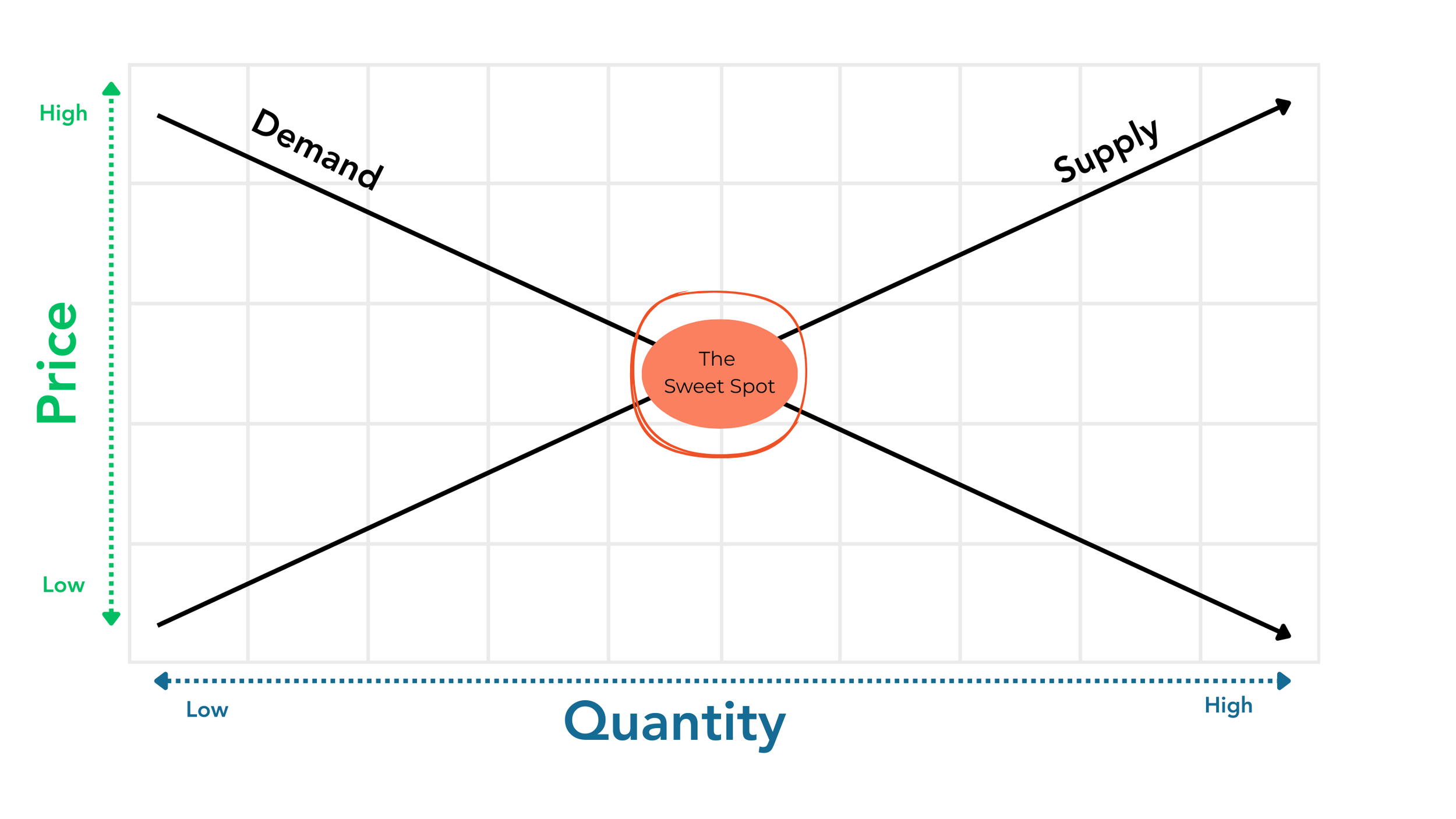
Supply and Demand
There is a price point where revenue is maximized without discouraging too many singers. Finding that point requires experimentation.
Price Signals Value
If dues are extremely low, the organization may unintentionally signal low commitment or low quality. Higher prices combined with scholarships often create a healthier balance.
Elasticity
Existing singers who are deeply connected to the choir may tolerate higher dues. Potential new singers are more price sensitive and may choose alternative activities if costs are too high.
Framing
How dues are presented matters. When singers understand that their membership sustains the organization, participation often feels more meaningful rather than transactional.
How to Set Choir Membership Dues
A simple process can help determine reasonable dues levels.
Step 1 — Calculate Annual Operating Costs
Examples include:
rehearsal space
music
accompanists
administration
technology systems
Step 2 — Estimate Membership Size
Example:
70 singers expected.
Step 3 — Determine Revenue Targets
Suppose the choir needs $21,000 from membership.
Step 4 — Calculate Dues
$21,000 ÷ 70 singers = $300 per singer per year
Organizations often adjust this number by offering scholarships or tiered options.
Tiered Membership Models
Tiered membership is surprisingly underused.
Possible structure:
Standard membership
Student membership
Scholarship membership
Sustaining member tier
Some singers are able and willing to contribute more. Tiered structures allow organizations to capture that additional support while remaining inclusive.
Scholarships and Accessibility
Music should be accessible.
Financial barriers can exclude talented singers who would otherwise thrive in the ensemble.
Common solutions include:
sliding scale dues
scholarship funds
sponsor-a-singer programs
volunteer exchanges
These approaches help balance financial sustainability with community access.
Retention: The Hidden Multiplier
Recruitment receives most of the attention, but retention is often more important.
If a choir recruits 20 new singers but loses 15 existing ones, growth is minimal.
Improving retention by even a small percentage dramatically stabilizes membership revenue.
Retention improves when singers experience:
strong leadership
meaningful repertoire
positive rehearsal culture
clear communication
genuine community
A choir that people love rarely struggles to maintain membership.
Technology and Systems for Scaling Membership
Administrative systems become essential as choirs grow.
Important capabilities include:
membership management
attendance tracking
music distribution
event scheduling
communication tools
billing automation
Without systems, administrative work expands faster than the choir itself.
With systems, organizations can scale smoothly.
Case Studies: Membership Revenue in Practice
Small Community Choir
35 singers
$150 annual dues
Membership revenue: $5,250
Mid-Size Chorus
90 singers
$300 annual dues
Membership revenue: $27,000
Children’s Choir Organization
200 singers across multiple ensembles
$600 tuition
Membership revenue: $120,000
Each model reflects different organizational goals, but membership is central in all of them.
Evaluating Membership as a Revenue Stream
| Metric | Rating | Explanation |
|---|---|---|
| Stability | 4/5 | Diversified across many singers |
| Scalability | 3/5 | Limited by rehearsal capacity |
| Cost | 2/5 | Requires administration and systems |
| Control | 5/5 | Membership levels are largely controllable |
Using our framework, few revenue streams offer that level of agency.
Final Thoughts:
Choirs Exist Because People Sing Together
Membership revenue is powerful, but it is also something deeper than a financial tool. Choirs exist because people gather to sing together. The singers are not just participants. They are the heart of the organization. When membership is healthy, the finances often follow. And when the finances are stable, the organization can focus on what matters most:
making great music together.